

Autologous Stem Cell Therapy
At our joint private clinic in Baden-Baden, we offer autologous pluripotent and multipotent stem cell therapy – an innovative approach within regenerative medicine. In this procedure, the body’s own cells are harvested from adipose tissue, processed (enzymatically purified), and re-injected during the same session.
The aim is to activate the body’s natural regenerative mechanisms – gently and on an outpatient basis.
What is autologous stem cell therapy?
Autologous stem cell therapy builds on the body’s intrinsic ability to regenerate by harvesting cells from the patient’s own adipose tissue and reintroducing them into the body in an enzymatically purified form.
The term autologous means that only the patient’s own cells are used – no foreign material is involved.
This is referred to as an autologous application, aimed at supporting the body’s natural regenerative processes through its own cells.
Origin and composition of the cells
The cells are obtained through a gentle mini-liposuction of the subcutaneous abdominal fat. This tissue is particularly rich in regenerative cell types, including:
- Adipose-Derived Regenerative Cells (ADRCs) – a heterogeneous population consisting of stem, precursor and immune cells
- Vascular-associated pluripotent stem cells (vaPS)
- Mesenchymal multipotent stem cells
- Progenitor cells
- Endothelial progenitor cells
- M2 macrophages, which play an important role in natural tissue repair
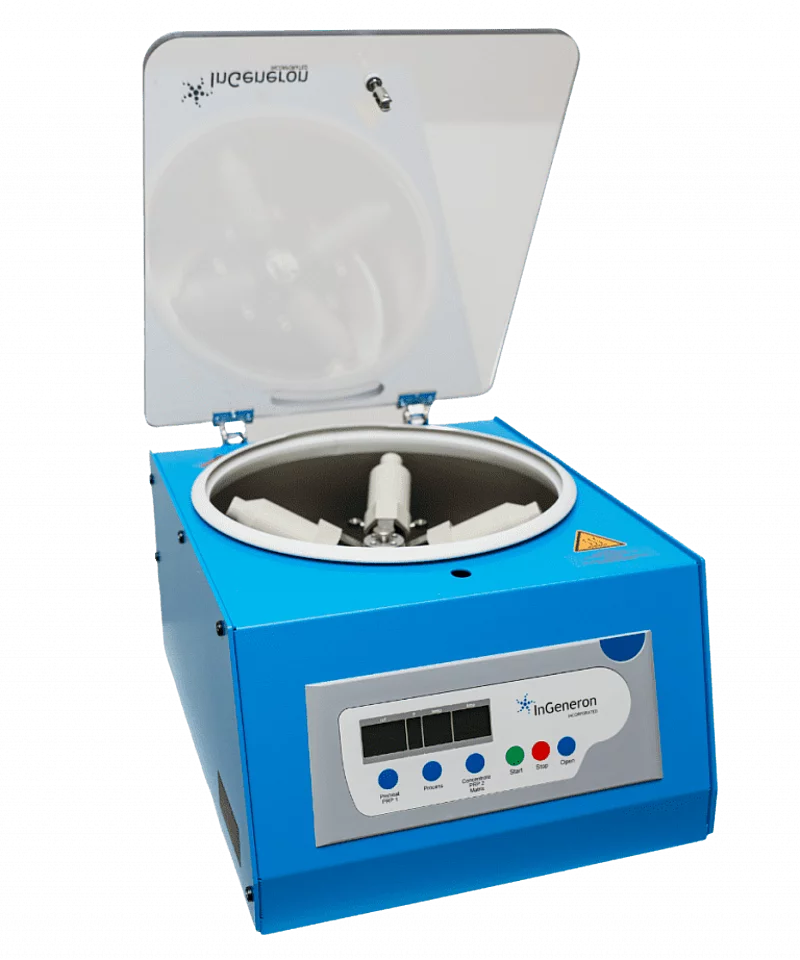
Processing is carried out under sterile conditions using the Transpose RT System by InGeneron. During this process, the cells are enzymatically released from the adipose tissue, washed, centrifuged, and filtered—without being altered in any way.
Medical background and distinction from other stem cell procedures
The cells present in adipose tissue possess broad regenerative potential, which can be activated by signals arising from the specific target region. They respond to local inflammatory and reparative stimuli, thereby supporting the body’s own healing mechanisms without being artificially expanded or modified.
This makes autologous therapy fundamentally different from procedures involving embryonic stem cells, which are cultured or genetically modified in the laboratory, or from allogeneic stem cell therapies (cells obtained from other individuals, including umbilical cord or placental stem cells). The adult cells used here remain unaltered and are applied exclusively in a homologous manner—that is, in tissues with comparable function (e.g., within the adipose compartment, known as “fat-to-fat transplantation”).
They are neither cultured nor genetically modified, meaning there is no risk of rejection or uncontrolled cell proliferation.
This method represents a contemporary form of regenerative medicine with the highest level of biological compatibility.